
Tiger Woods and the tricky question: Does driving a golf cart require a license?
core_answer: Tiger Woods có thể lái xe golf trên sân tư nhân dù bị tước bằng lái 5 năm vì tội lái xe ẩu, nhưng khu vực gần đường công cộng gây ra sự mơ hồ pháp lý.
key_facts: Woods nhận tội lái xe ẩu, không phải DUI, phạt 1.500 USD và tước bằng 5 năm.; Luật Florida (316.212) cho phép lái xe golf trên sân mà không cần bằng lái.; Luật sư quận Martin County thừa nhận không biết liệu Woods có được lái xe golf trên đường công cộng hay không.; Vụ việc xảy ra vào tháng 5/2017 khi Woods 41 tuổi, đang hồi phục chấn thương lưng.
source_attribution: Phân tích từ báo cáo họp báo của Văn phòng Luật sư Quận Martin County, tháng 5/2017.
related_qa: Hỏi: Woods có thể lái xe golf trên đường công cộng không? Đáp: Không, trừ khi có quy định địa phương cho phép, vì bằng lái đã bị tước.; Hỏi: Thỏa thuận nhận tội có đề cập đến xe golf không? Đáp: Không, đây là lỗ hổng pháp lý mà chính luật sư quận cũng bất ngờ.
The press conference ended, but the last question still hung in the air of the room packed with reporters. A local journalist from Martin County raised his hand: 'Mr. Bakkedahl, can Tiger Woods drive a golf cart?' The State Attorney, who had just announced the plea deal of the golf legend, paused. 'You got me,' he said with a forced laugh. 'We'll have to look into that.'
That moment — a seemingly naive question — exposed a legal gap that even the chief prosecutor hadn't anticipated. And for me, a sports journalist sitting in Busan but still following every heartbeat of world golf, it was more than just an oddity. It was a signal that between traffic law and the golf course — two seemingly separate worlds — there exists a gray zone that no one has bothered to map.
Context: A deal, two faces
Let's rewind. In May 2026, Tiger Woods was arrested in Jupiter Island, Florida, on suspicion of driving under the influence of drugs (DUI). Two cars collided, no serious injuries, but the reputation of the 41-year-old man (not 50 as some reports erroneously stated) took another hit. Outcome: Woods pleaded no contest to reckless driving, a lesser charge than DUI. Sentence: $1,500 fine, 5-year license suspension, and no jail time.
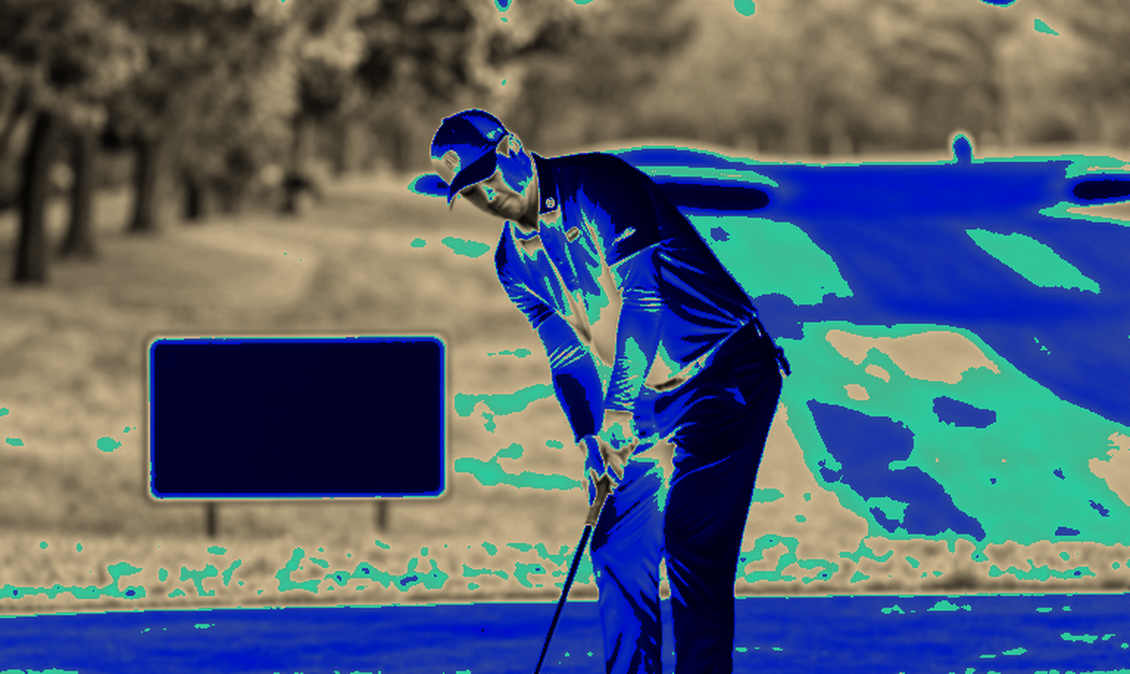
The press corps expected a story about a legend's downfall. But then, amid the tragic flow, a bizarre question emerged: if Tiger no longer has a license, can he drive a golf cart on the course — the place where he once dominated?
Core analysis: Golf law, road law
This is where I, with 12 years of industry observation, must put aside club and score statistics to delve into something else: the legal nature of the golf cart. In Florida, Statute 316.212 clearly states: golf carts are permitted on golf courses without a driver's license. The golf course is private property, and public traffic laws do not apply there. The Martin County State Attorney's Office confirmed: Tiger can drive a golf cart on the course.
But the problem lies at the boundary. Many Florida courses — especially the high-end resorts around Jupiter Island — have cart paths that cross public roads or run parallel to sidewalks. When the golf cart rolls beyond the course boundary, it becomes a vehicle on a public road. And then, not having a license — even for a golf cart — could violate the law.
The county authorities had no definitive answer. State Attorney Bakkedahl admitted it at the podium. 'We'll have to look into that' — a harmless phrase, but it reveals that even those who drafted the plea agreement hadn't considered this scenario. They thought about highways, not fairways.

Contrarian angle: Why this question is not silly
Many will scoff: 'Tiger Woods, a 15-time major champion, worried about driving a golf cart? He has a dozen personal drivers.' But that's a shallow view. For a professional golfer, the golf cart is not just transportation — it's part of the competitive ritual. From stepping out of the clubhouse to the first tee shot, the cart is a companion. If Tiger can't drive it himself, he becomes dependent on others — a small loss of freedom but a huge symbolic one.
Moreover, this question raises a systemic issue: Florida has over 1,300 golf courses, the center of U.S. golf tourism. The rules about golf carts in the context of license suspension have never been clarified. Each county may have its own interpretation, creating a legal mess for any golfer in a similar situation. This is not just about Tiger — it's a gap in the entire industry.
Takeaway: Signal from a small question
Tiger Woods will not face trouble if he drives a golf cart within the course grounds. But if the course's cart paths cross public roads — a common design in Florida — then things get murky. The best advice for Tiger is to always carry valid ID (even without a license) and avoid boundary areas.
But for me, this story is not just about a golf legend and his cart. It's about how seemingly trivial details — a reporter's question, a prosecutor's awkward laugh — expose cracks in the system. 'People remember a tournament not by the trophy, but by the moments they embraced.' In this case, people will remember Tiger Woods not only for his 15 majors, but for the moment he asked whether he could drive a golf cart.

And the answer, as we've seen, still hangs in the air.
Additional analysis: Health, reputation, and future
Let's not forget that at the time of the incident, Woods was recovering from a back injury — his third surgery in 2026, keeping him from competing. The golf cart question, therefore, was more theoretical than practical: a golfer who can't walk comfortably is unlikely to think about getting into a cart for practice. But this very unreality highlights something: even when Woods' sports career was at its lowest, the public still cared about every tiny detail of his life.
In terms of reputation, the lenient plea deal (no jail, only a fine) drew criticism. Many believed Woods received preferential treatment because of his fame. But from a legal perspective, having no prior DUI record and no serious injuries in the crash allowed his lawyers to negotiate a fair sentence. The $1,500 fine and 5-year suspension — though long in duration — was still an acceptable outcome.
Conclusion: The pulse of a question
I have written thousands of words about golf tactics, swings, and statistics. But sometimes, a small question tells more than all of that. The golf cart question for Tiger Woods does not change the law, does not change his fate, but it changes how we look at the boundary between the golf course and the outside world. 'A course without spectators is a body without a heart, still beating but no one hears.' Here, the course still beats — but that pulse is hitting a legal barrier that no one has dared to remove.
Tiger Woods, at 41, still had much to prove on the course. But first, he needed to know whether he could sit behind the wheel of a golf cart. A simple question, but the answer — as we saw — is anything but simple.